The Difference Between Fruits and Vegetables: Explained
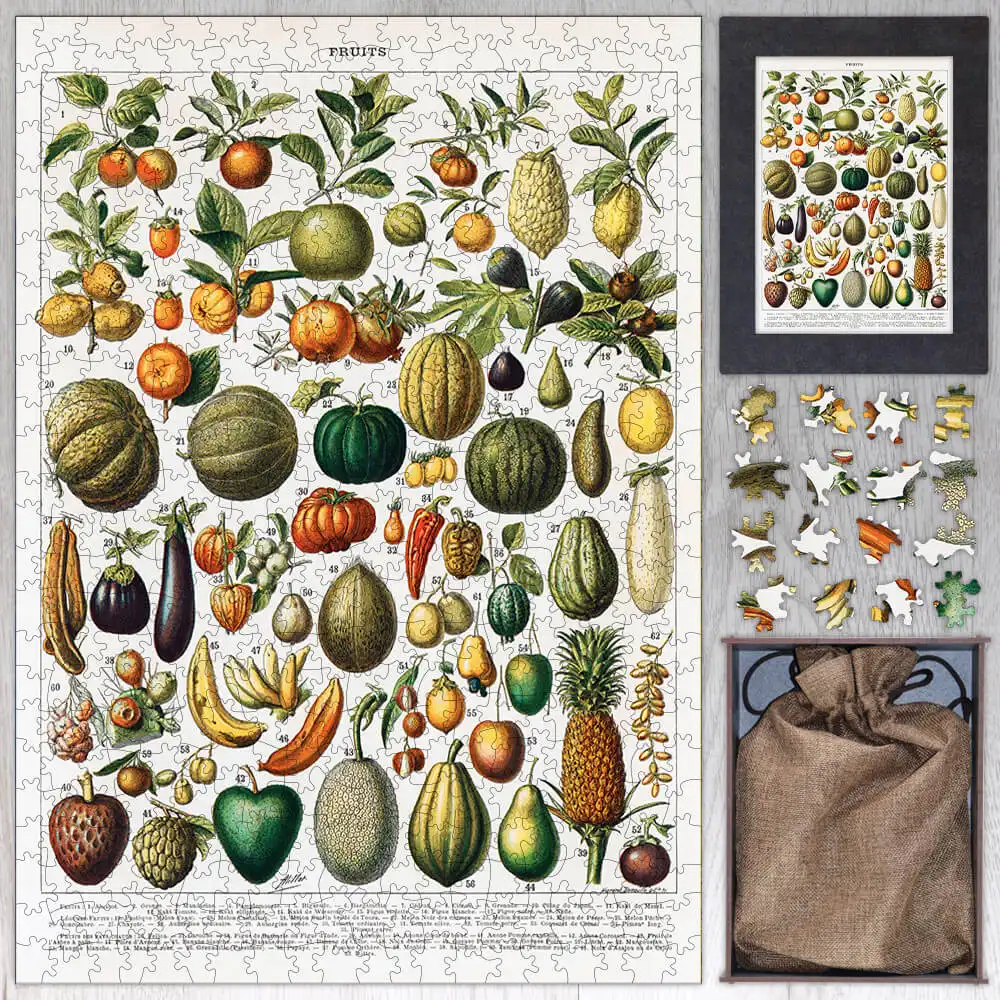
We are excited to announce our latest addition to our collection of wooden jigsaw puzzles – Fruits and Vegetables, Nouveau Larousse Illustre puzzle. This beautiful puzzle features a vintage poster of fruits and vegetables with names of each fruit and vegetable. With its vibrant colors and intricate details, this puzzle is sure to be a hit with puzzle enthusiasts of all ages.
But, before we delve into the details of our new puzzle, let us take a moment to talk about fruits and vegetables in general.
How Many Fruits Are There?
Fruits come in many shapes, sizes, and colors. From apples to pineapples and everything in between, there are over 2000 types of fruits in the world. While not all fruits are available in every part of the world, there are still many options to choose from.
What Fruits Are Good for Diabetics?
For people with diabetes, it is important to choose fruits that are low in sugar and high in fiber. Some examples of fruits that are good for diabetics include berries, citrus fruits, apples, and pears.
What Fruits Have Protein?
While fruits are not typically known for their protein content, some fruits do contain small amounts of protein. Examples include guava, kiwi, and passionfruit.
What Is the Difference Between Fruits and Vegetables?
Fruits and vegetables are often confused with one another, but there is a clear distinction between the two. Fruits are the mature ovaries of flowering plants and contain seeds, while vegetables are any other part of the plant that is edible, such as leaves, stems, and roots.
How to Steam Vegetables?
Steaming is a healthy way to cook vegetables as it helps to retain their nutrients. To steam vegetables, place them in a steamer basket over boiling water and cover with a lid. Cook until tender, but still firm.
What Are Starchy Vegetables?
Starchy vegetables are those that contain higher amounts of carbohydrates and are often used as a substitute for grains. Examples include potatoes, sweet potatoes, and corn.
What Vegetables Are in Season?
Eating seasonal vegetables ensures that you get the freshest and most nutritious produce available. In the spring, look for asparagus, artichokes, and peas. In the summer, enjoy tomatoes, cucumbers, and zucchini. In the fall, savor pumpkins, butternut squash, and beets.
How to Saute Vegetables?
Sautéing is a quick and easy way to cook vegetables. Heat a little oil in a pan over medium-high heat, add your vegetables, and stir-fry until tender and lightly browned.
What Are Root Vegetables?
Root vegetables are those that grow underground and are an excellent source of vitamins and minerals. Examples include carrots, turnips, and parsnips.
We hope you enjoyed this little detour into the world of fruits and vegetables. Remember, a healthy diet rich in fruits and vegetables can help prevent chronic diseases and promote overall health and wellness. And, don't forget to try our new Fruits and Vegetables, Nouveau Larousse Illustre puzzle – a fun way to learn more about the many different types of fruits and vegetables available, check out our other Cool Puzzles as well.
https://puzzlesprint.com/the-difference-between-fruits-and-vegetables-explained


Comments
Post a Comment